How the Date Becomes the Note
Every Indian currency note carries a six-digit serial number. We find a genuine note whose six digits spell out your special date.
The idea
Your special date is represented by the six-digit serial number printed on an Indian currency note. The date is written in DDMMYY format — two digits for the day, two for the month and the last two digits of the year.
The note is a genuine, circulating note issued by the Reserve Bank of India. Nothing is printed or altered — the date already exists in the serial number.
Any denomination, or several
This concept can be created using any denomination or a combination of denominations — from the ₹1 note to the ₹500 note — so you can choose a single note or build a collection of the same date across denominations.
For example
| Special date | 26 July 1979 |
| Date format | DDMMYY |
| Serial number | 260779 |
A note bearing the serial number 260779 represents this date: 26 · 07 · 79. See it on a real note below.
26 July 1979 on a ₹10 Note
This genuine ₹10 note carries the serial number 47E 260779. The six digits after the prefix are the date.
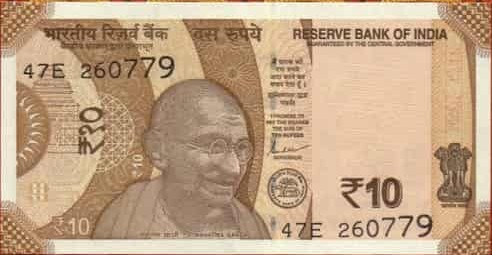
The serial number is printed twice on every note — both are highlighted.
DD — the Day
The first two digits of the serial number are the day of the month. Here, 26 is the 26th.
MM — the Month
The next two digits are the month, written as a number. 07 is July.
YY — the Year
The last two digits are the year. 79 stands for 1979.
How to read it
- Ignore the prefix (47E) — this is the note’s prefix and is not part of the date.
- Take the six digits that follow: 260779.
- Split them in pairs: 26 · 07 · 79.
- Read them as Day · Month · Year: 26 July 1979.
The note is a genuine, circulating RBI note — nothing is printed or altered.
Dates Worth Keeping
Availability depends on note stock and the date combination.